Why I Finally Stopped Accepting "It's Just Your Age" About Losing My Strength

For about five years, my own body felt like it was quietly renegotiating our arrangement. Somewhere after 65, the grocery bags got heavier. The stairs got longer. Nothing hurt exactly — I was just tired in a way that a good night's sleep didn't fix, and I noticed I'd started planning my day around how much lifting and standing it would involve.
Everyone I asked told me the same thing: that's just what happens. And they weren't wrong, exactly. Adults do gradually lose lean muscle as the decades pass — it's one of the most well-documented parts of getting older. What nobody told me is that "normal" and "nothing you can do about it" are two completely different statements.
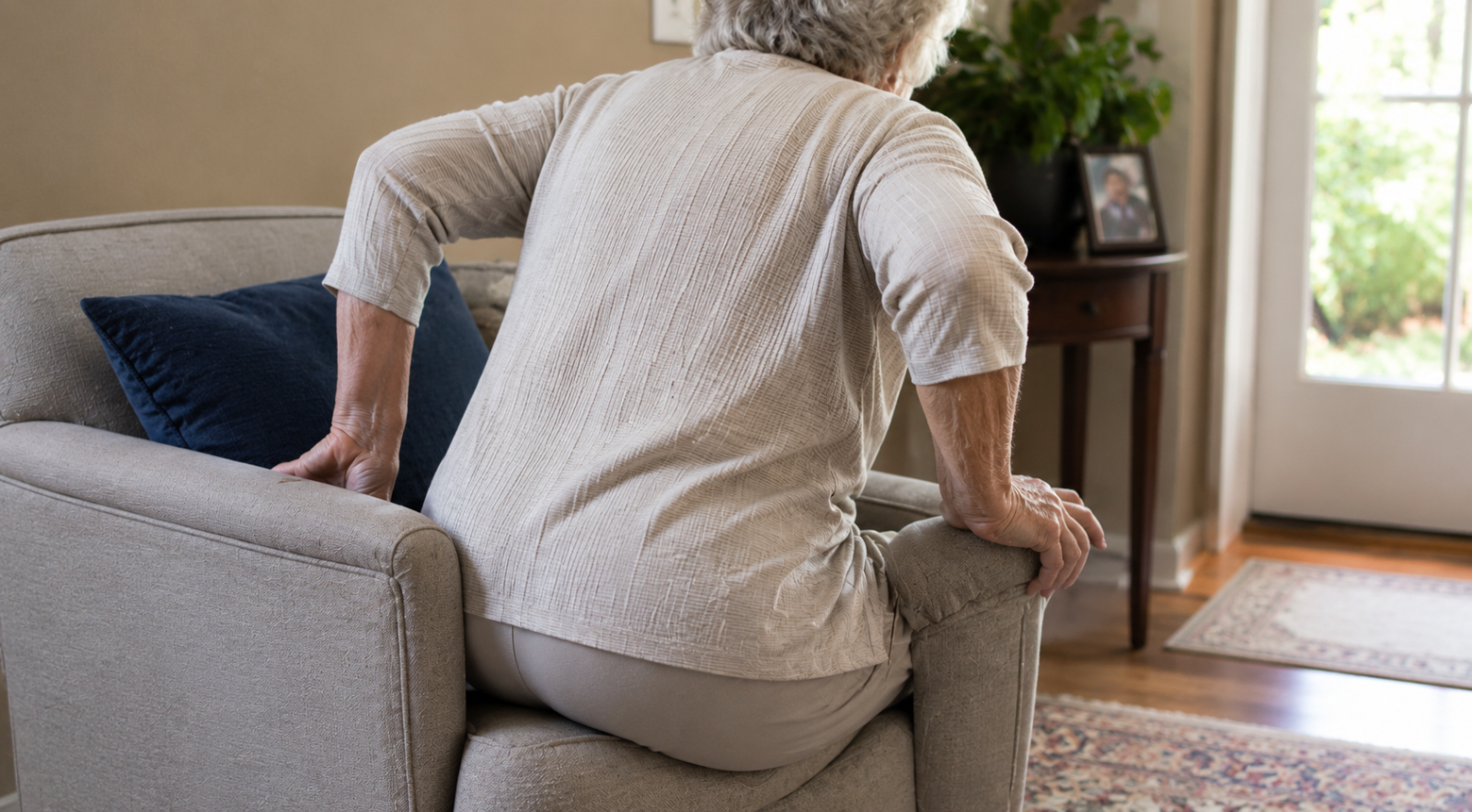
I was never an athlete. I played weekend tennis, walked most days, and did some light dumbbell work in my forties. I thought I'd been reasonably responsible about it. But by 70, getting out of a low chair had become a two-hand operation, and I'd started letting other people carry my suitcase — not because I couldn't, but because I wasn't sure anymore.
So I tried things. Protein shakes. A drawer's worth of supplements. A trainer who specialized in older clients, which helped — but the sessions left me sore enough that I'd take three days off afterward, and whatever I gained seemed to evaporate the moment life got busy. It was also expensive in a way that started to feel silly.
I was ready to just accept it
Two friends were further down the same road. One had moved into assisted living, mostly because managing a house on her own had become too physical. The other was still at home but leaning on his kids for nearly everything. My own children had begun using the phrase "when you might need more help," which is a sentence you feel in your stomach.
Meanwhile my daughter was organizing a three-day family reunion — beach games, grandkids, the whole production. Years ago I'd have been the one starting the volleyball match. This time I was quietly dreading it and had already ordered a folding chair so I'd have somewhere comfortable to watch from.


Then a man in his eighties changed how I thought about all of it
I was in a sporting goods store buying that chair when I noticed an older gentleman working his way through the fishing rods — casting a heavy rod to test it, crouching down to check reels, carrying a full basket like it was nothing.
I asked him, more or less outright, what his secret was. He laughed and said he was 80, that he'd trained with weights most of his life, and that a stretch of a few months where he couldn't train at all had knocked him flat. When he went back to it, he told me, he felt like he had no strength at all — and it had taken patience, plus one change to his daily routine, to start feeling like himself again.
"I felt as if I had no strength at all. But I persisted, and have made some progress… For some reason, I feel as if I've noticed some internal changes that may be translating into more strength."
— Michael W., 80, Bloomington, IN Verified buyer review on nativepath.com · trimmed for length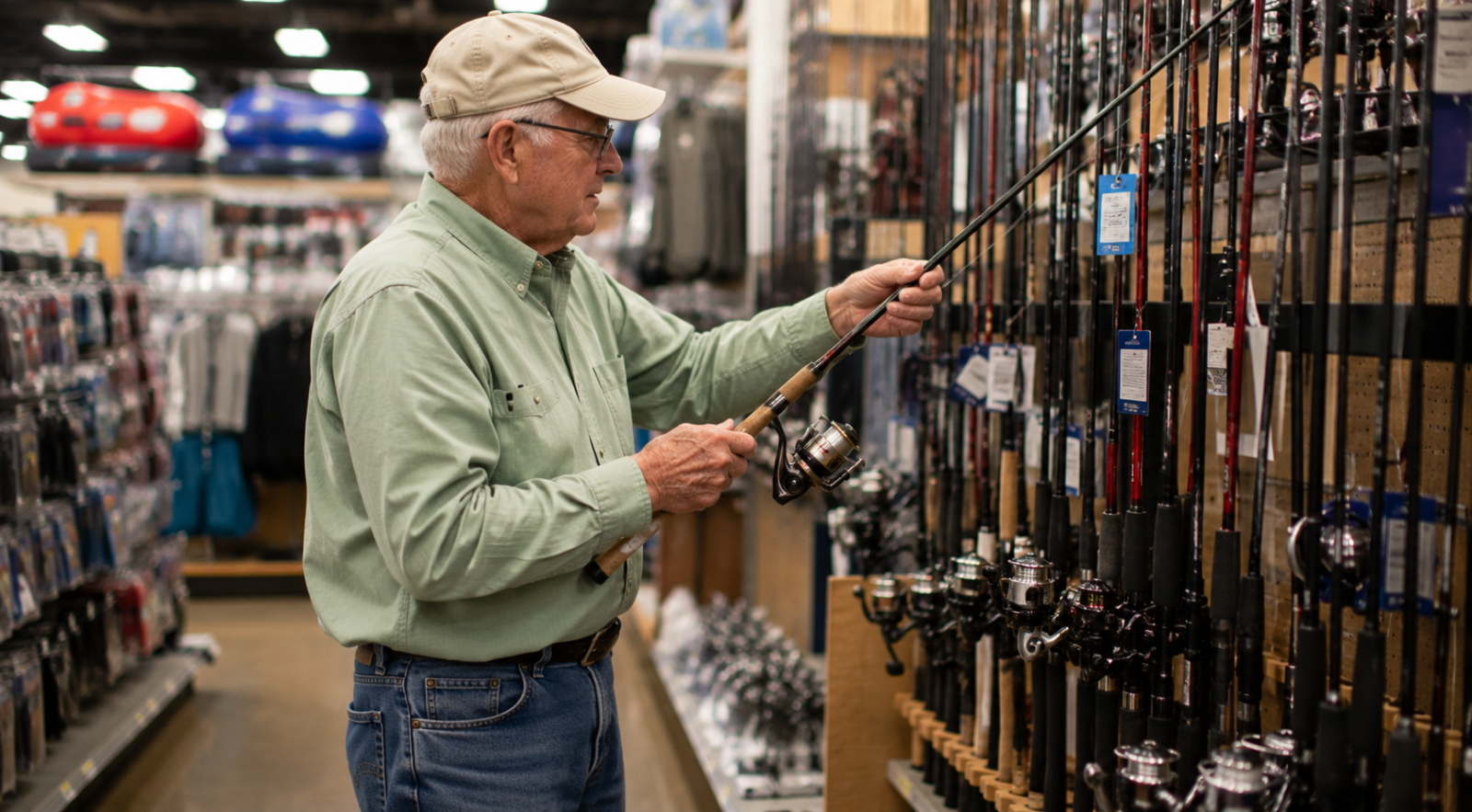
The change wasn't a procedure, a prescription, or a supplement I'd have guessed. He pulled a container out of his jacket pocket. Creatine.
"Isn't that the stuff for twenty-five-year-olds at the gym?" I said. That was genuinely my whole understanding of it.
What I found out about creatine after 50
Not anymore, apparently. Creatine is one of the most-studied nutrition ingredients there is — a few decades and well over a thousand studies deep — and a lot of the more recent interest has been in older adults rather than athletes. It's not an exotic compound. Your body already makes it and stores most of it in your muscles, where it helps supply the quick energy muscles use to do work.
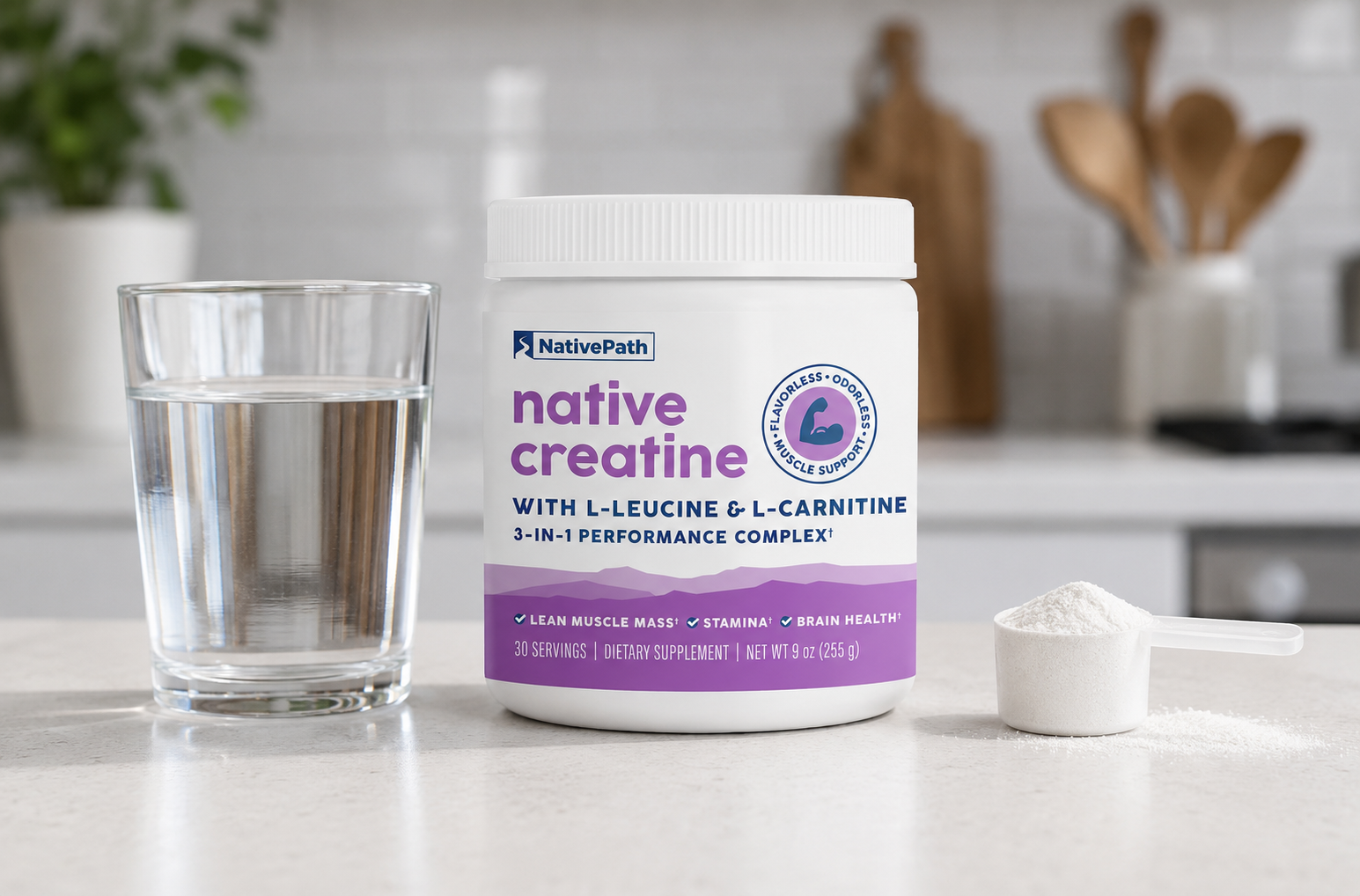
The specific product he used was Native Creatine from NativePath, a company built around nutrition for adults over 50. What caught my attention was that it wasn't formulated like a bodybuilding product.
What's actually in it
- 5g creatine monohydrate — the plain, thoroughly researched form, not a trendy variant
- 2.5g L-leucine — the amino acid most associated with muscle protein synthesis
- 1.5g L-carnitine — supports cellular energy metabolism
- Nothing else — no sweeteners, no flavoring, no fillers
- Made in the U.S. at a GMP-certified facility, third-party tested by lot
How the three ingredients are meant to work together
- Creatine helps replenish muscle energy stores. Most of the creatine in your body sits in muscle tissue, where it supports the energy system muscles draw on for effort — standing up, climbing stairs, carrying something across a parking lot.
- L-leucine supports muscle protein synthesis. Leucine is the amino acid most associated with signaling the body to build and maintain muscle tissue, a process that becomes less efficient with age.
- L-carnitine supports cellular energy metabolism. It plays a role in how cells' mitochondria turn fat into usable energy, and has been studied for occasional post-exercise soreness.
- Creatine also supports brain function. Your brain uses creatine for energy the same way muscle does, which is why it's studied for cognitive performance and mental clarity as well as strength.

None of this is a shortcut around effort. Creatine supports the work your muscles do; it doesn't replace the work. The research consistently shows the biggest changes when it's paired with some kind of resistance activity — and "resistance activity" can mean bands, light dumbbells, or the stairs in your own house.
What to expect, and when
NativePath was co-founded by Dr. Chad Walding, a Doctor of Physical Therapy whose practice centered on helping older adults hold onto their strength and mobility. The company's own published guidance on timing is refreshingly unglamorous:
- Days 5–7: some people notice early changes in how physical tasks feel, with consistent daily use
- Around 2 weeks: more noticeable benefits for most people
- Around 4 weeks: muscle creatine stores reach full saturation — when results tend to be most apparent, especially alongside resistance activity

Taken daily is the whole trick. One scoop (8.5g) in at least 8oz of any liquid, any time of day. It's flavorless and odorless, so most people put it in water, coffee, tea, or a smoothie.
"I take Native Path creatine everyday mixed in with a water bottle of electrolytes. I like it because it dissolves well and know it's good for me. I'll keep taking it and go for the best deal from Native Path so I don't run out."
— H T., Houston, TX Verified buyer review on nativepath.com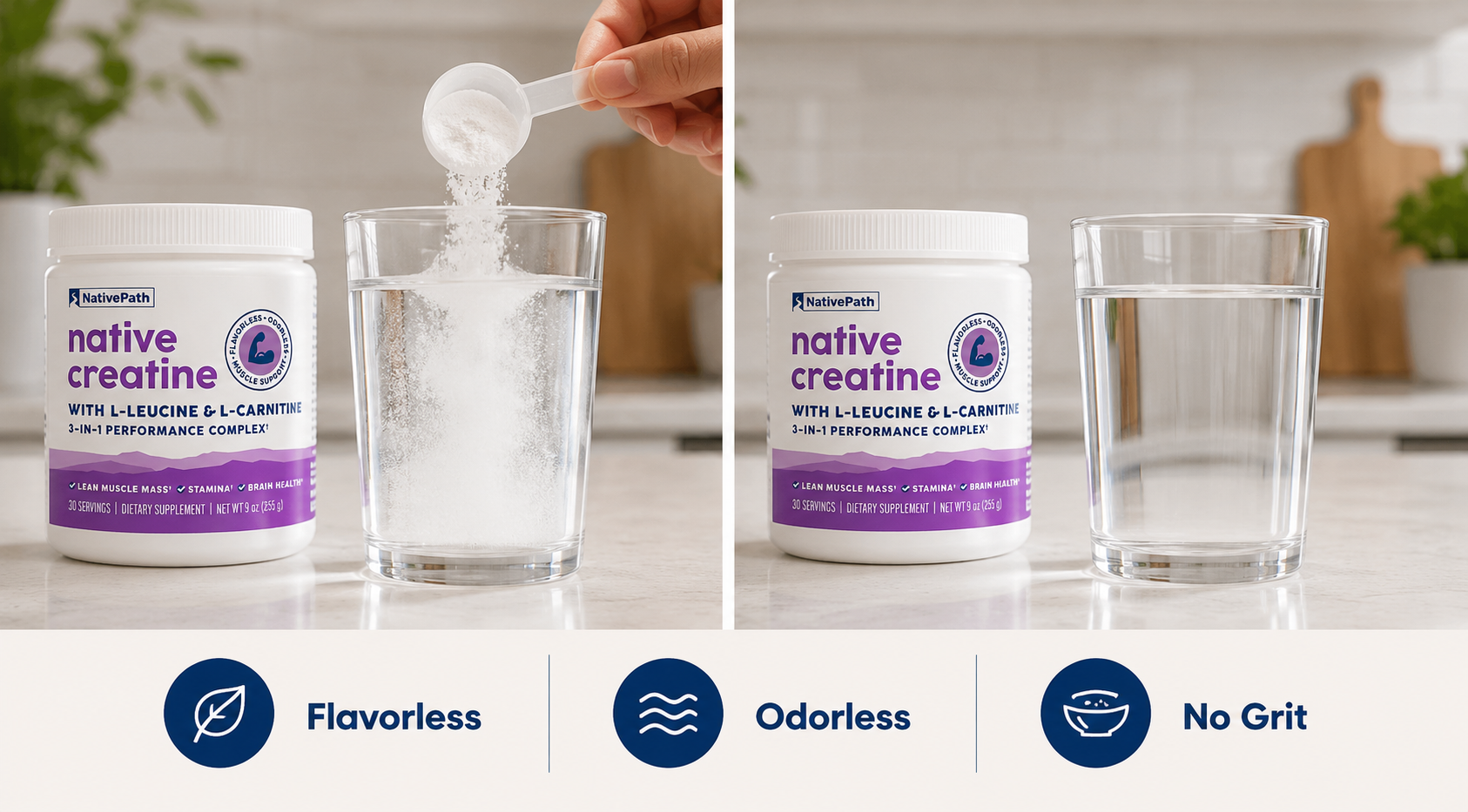
As for me: I've been taking it daily since that conversation in the sporting goods store, and I've gone back to light dumbbells twice a week. I'm not going to tell you I'm a different person. I'll tell you that I stopped negotiating with myself about the stairs, I went to the reunion, and the folding chair mostly stayed folded.
Story is a composite representation based on the lived experiences of multiple customers. Individual results may vary.
What NativePath customers say
"I am able to do more reps during my workouts with weights and bands. Recovery is faster. I am 82 yrs. old."
— Pam P., 82, Hurlock, MD Verified buyer review on nativepath.com"I'm 71, work full time physical job and I am benefiting from the [5g] I take everyday. I feel stronger."
— Pam M., 71 Shared with NativePath, used with permission"I've been taking this product faithfully since I received it. My balance seems to be getting better. I'm sticking with it hoping for lots more improvement."
— tracy c., Denver, CO Verified buyer review on nativepath.com"My wife reports that she seems to feel more energy. My wife is 68 years old."
— Michael W., 80, Bloomington, IN Verified buyer review on nativepath.comReviews are the customers' own words, lightly trimmed for length as marked with ellipses. Customer results have not been independently verified. Individual results may vary.
How much does it cost?
A single jar of Native Creatine — 30 servings, one month — retails for $53 on NativePath's own site. The reason I'm writing about the offer at all is that the stock-up pricing is meaningfully better than the single jar, and there's no subscription attached to any of it.
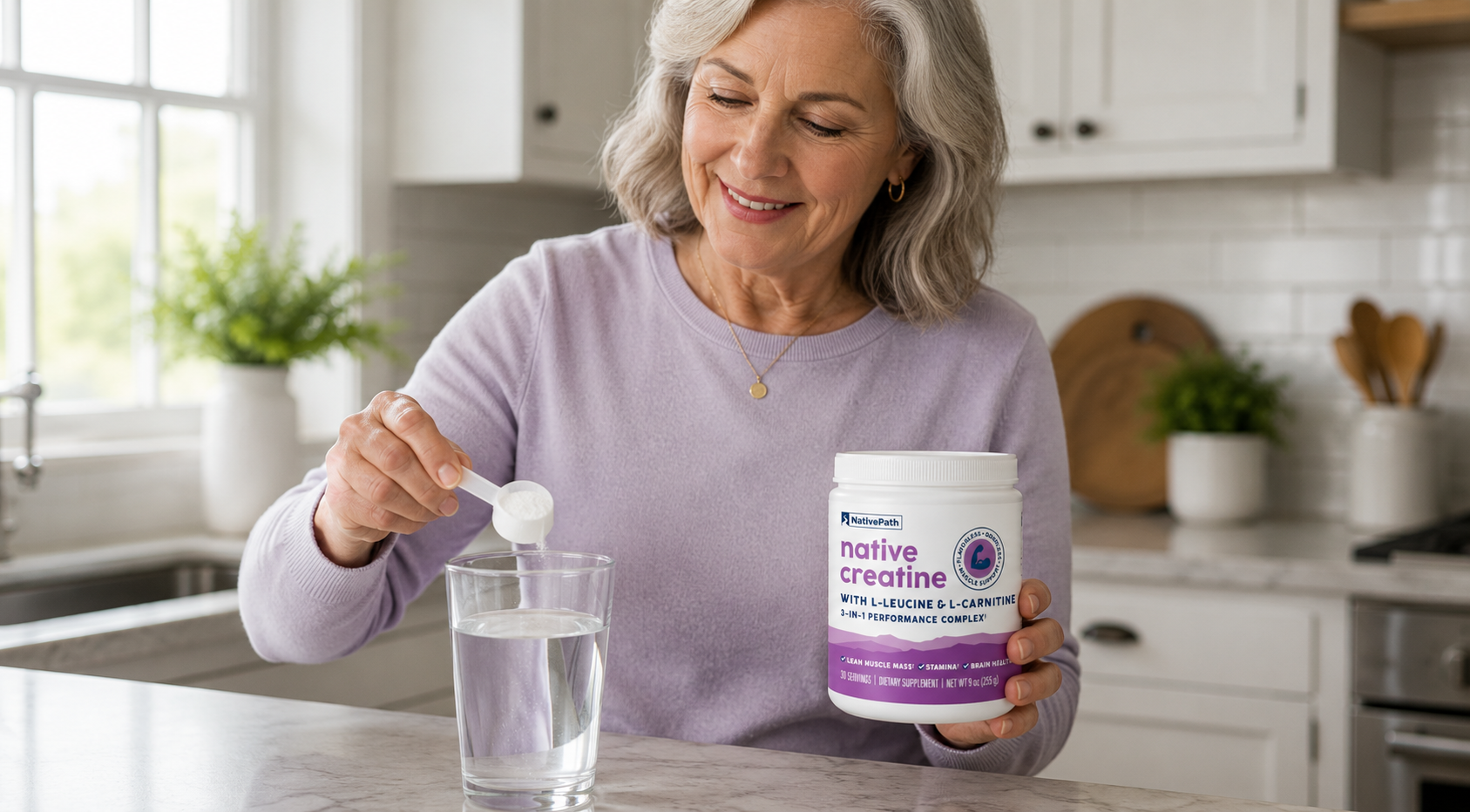
Because creatine works by saturating and then maintaining muscle stores, it's a take-it-daily-or-don't-bother kind of ingredient. That's the honest argument for buying more than one jar: not urgency, just arithmetic. Running out for three weeks means starting the four-week clock over.

Is Native Creatine worth it?
For me, yes — with two caveats I'd want a friend to hear.
The first is that creatine is not a replacement for moving your body. It supports the effort; it doesn't do the effort for you. If you add it and change nothing else, you're likely to be underwhelmed.
The second is that it isn't automatically right for everyone. Creatine is generally well tolerated, but some people get temporary water retention or mild stomach upset, and it's important to drink enough water with it. If you have a kidney condition, are pregnant or nursing, or take prescription medication, talk to your own doctor before starting — that's not boilerplate, it's the actual instruction on the label.
Every jar is backed by a 365-day money-back guarantee. If it doesn't work for you, you email their US-based support team (cs@nativepath.com) or call 1-800-819-2993 for a full refund.
What I'd say is this: I spent five years treating my own decline as a fixed cost of getting older, and I was wrong about how fixed it was. That's the part I'd want to go back and tell myself.
One note on the pricing: the discounted stock-up tiers are a limited-time promotion and NativePath can end them without notice. If the page below is showing $23 per jar on the six-jar option, that's the lowest price I've seen it.
Disclaimer: Story is a composite representation based on the lived experiences of multiple customers. Customer results have not been independently verified. Individual results may vary. These statements have not been evaluated by the Food and Drug Administration. This product is not intended to diagnose, treat, cure, or prevent any disease. The information on this site is for general information purposes only and is not a substitute for professional medical advice, diagnosis, or treatment.